
Glusburn Institute
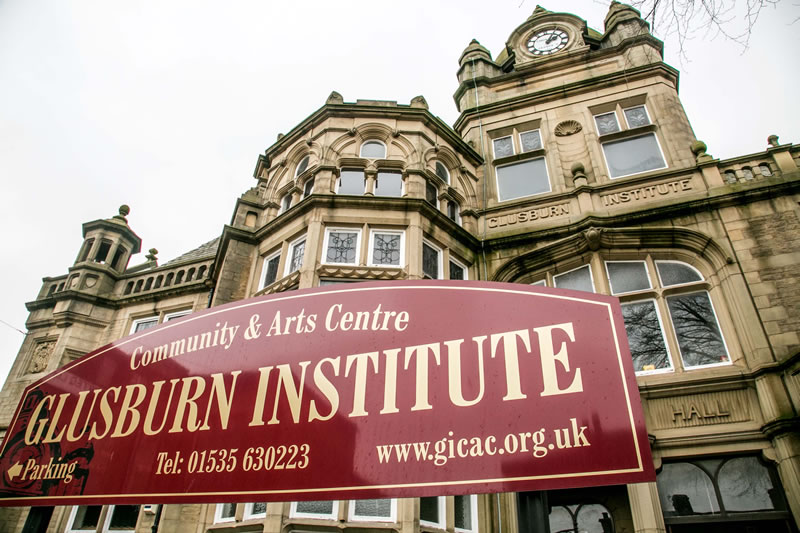
The Glusburn Institute is a volunteer-led community arts venue at the heart of Glusburn.
The Information below is courtesy of gicac.org.uk and cravenherald.co.uk
- info@gicac.org.uk
- 01535 630223
-
Glusburn Community & Arts Centre,
Colne Road,
Glusburn,
North Yorkshire,
BD20 8FQ
About The Glusburn Institute
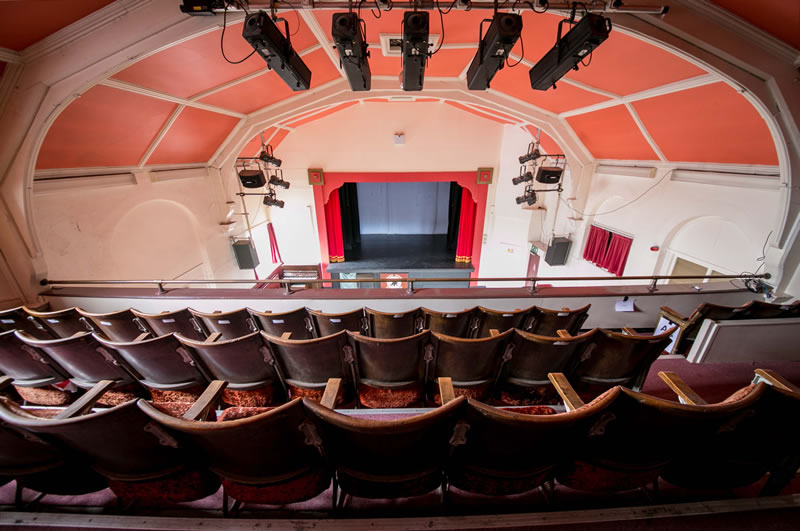
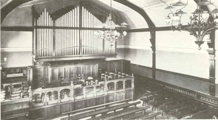
We host a programme of events, concerts and theatre taking place in our wonderful proscenium arch theatre space, plus have weekly classes and activities taking place most days. In addition, we have a selection of rooms all available for hire by anyone. Our aim is to provide a community arts venue with something for everyone. Managed by a dedicated team of trustees, we employ a small but dedicated team to ensure the smooth running of the day to day programme of activities and events.
Classes, Activities, Concerts and Theatre
We have a vast amount of regular activities, concerts and theatre shows taking place throughout the year. There is something happening most days within the venue. We are always keen to take on and provide further activities and classes. If you see an opening for something that you can provide or wish to make a suggestion, why not get in touch?
Building Preservation and Development
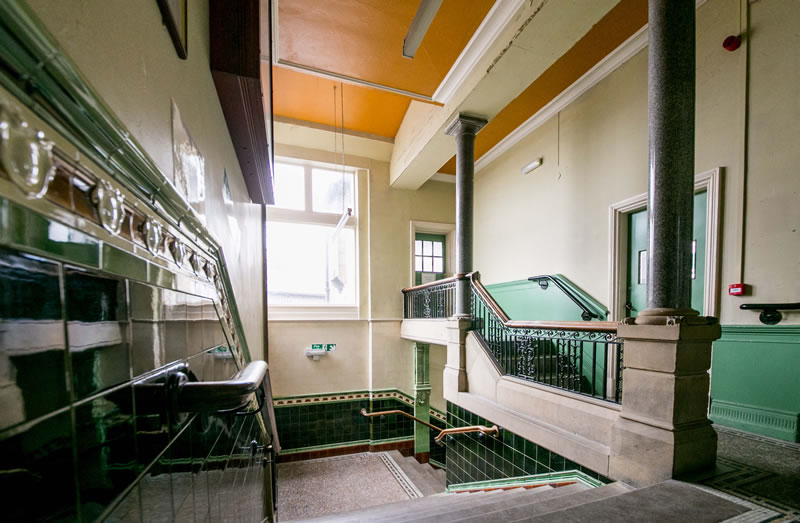
The age of our Grade II listed building brings its own set of challenges. In recent years, we have made a number of improvements and alterations to the building in order to provide the facilities our customers expect. The ongoing development of the building must meet the required standards of safety and accessibility whilst also preserving its unique heritage and historic features. A regular programme of routine maintenance by our own team and external contractors ensures Glusburn Community and Arts Centre continues to be structurally sound, safeguarding the provision of an arts-focussed community facility in Craven for years to come.
History
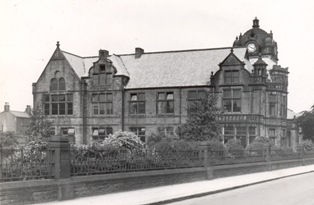
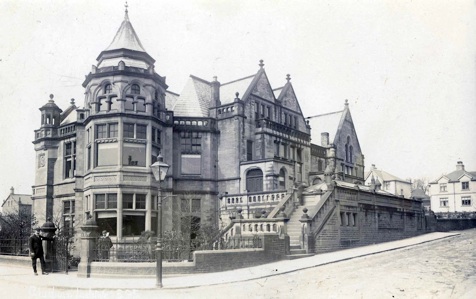
Glusburn Institute was erected in 1892 as a religious, educational and social centre for the people of the village.
It was a permanent endowment from local mill owner John Horsfall, who was later to receive a baronetcy for his philanthropic work.
He owned Hayfields Mill where the majority of villagers worked.
“My only wish and hope is that the institution shall be the means of general improvement to the people of this and the surrounding villages and of raising them to a higher standard, morally, intellectually and spiritually,” he said.
His gesture was similar to that made by Sir Titus Salt in the village of Saltaire and the two institutes are said to bear many similarities.
Although officially opened in 1892, Glusburn Institute was added to over the following 20 years.
An extension was built in 1897 to house art rooms on the upper floor and a gym on the lower floor.
Bathing facilities were provided by another extension in 1905.
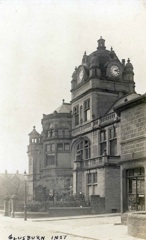
And the final pieces – the clock tower and dome – were completed in 1911 to mark the Coronation of George V.
Numerous activities developed and the institute became home to conversaziones (a kind of concert), Glusburn Institute Players, Glusburn Women’s Institute, the Band of Hope, pensioners’ teas, Cross Hills and District Youth Club, Men’s Choir, Young People’s Fellowship and a library.
The lower ballroom (now a veterinary practice) was used for old-time dancing and the top ballroom was for modern dancing.
But it was not all good news. In the mid 1930s, there was concern over the behaviour of some attendees and the 1936 annual meeting decided that members had to be approved.
In 1948, the art room was converted to a Baptist Chapel and the rooms below were used for the Sunday School.
There were big changes in the 1970s when the Horsfall family transferred the building into a charitable trust. The parish council became the custodian trustees and a management committee was appointed.
The constitution, submitted to the Charity Commission, stated: “The object of the charity shall be the provision and maintenance of a village hall for the use of the inhabitants of Glusburn and the surrounding district without distinction of political, religious or other opinions, including use for meetings, lectures and classes and for other forms of recreation and leisure time occupation with the object of improving the life for the said inhabitants.”
The new committee agreed to sell the Baptist Church and the rooms underneath to the West Yorkshire Baptist Association and these were then partitioned off from the main building.
Other changes included the closure of Hayfield Mill Social Club, which met in the main hall – although its weekly bingo session continued – and the conversion of the ground floor kitchen into a playcentre. The swimming pool closed because it failed to meet health and safety standards.
Then, in 1996, the institute faced a new threat which put its future in doubt.
A fatal hotel fire in Scarborough resulted in strict new regulations being introduced and Glusburn Institute was told it would have to erect a new fire escape.
But its plans initially failed to find favour with Craven District Council’s planning committee. “We shall have to give the viability of the whole building some very serious consideration,” said the then management committee chairman Allan Clough.
However, following desperate pleas, the crisis was averted and planning permission was granted.
More changes followed in 2000 when the Baptist Chapel closed and was put on the market with a £45,000 price tag.
Institute managers said buying the chapel would secure the future viability of the institute and they persuaded the parish council to purchase the building, using £30,000 of its own money and £15,000 from the Glusburn Pantomime Fund.
“The building is unique to the whole area and to bring it back as a whole will reset the jewel in the village,” said secretary Peter Seward.
Today, the institute is a thriving arts venue, hosts numerous organisations and groups and is home to Ashlands Veterinary Practice.
And the future looks rosy as it enters a new era as Glusburn Community and Arts Centre.
As former headteacher Winifred Harrison said in her book marking the centenary of the institute in 1992: “Sir John’s Horsfall’s vision of the institute as a religious, social and educational centre for the village is a material fact.
“We must say a retrospective thank you to the one who had this vision for the community life of Glusburn, to those who gave freely of their time, thought and energy to make the dream a reality and to those who saw the institute through difficult years.
“It is good that there are present-day enthusiasts who are willing to carry on the good work. My hope is with the younger generation and that through them the institute should continue to play a major part in village life.”


Glusburn & Cross Hills
History
Find out more about the history of Glusburn and Cross Hills Parish
Schools & Nurseries
–
Glusburn Park
Find out more about our attractive park and facilities
Doctors
–
Glusburn Institute
Find out more about the history and activities happening at Glusburn Institute Community and Arts Centre
Churches
–